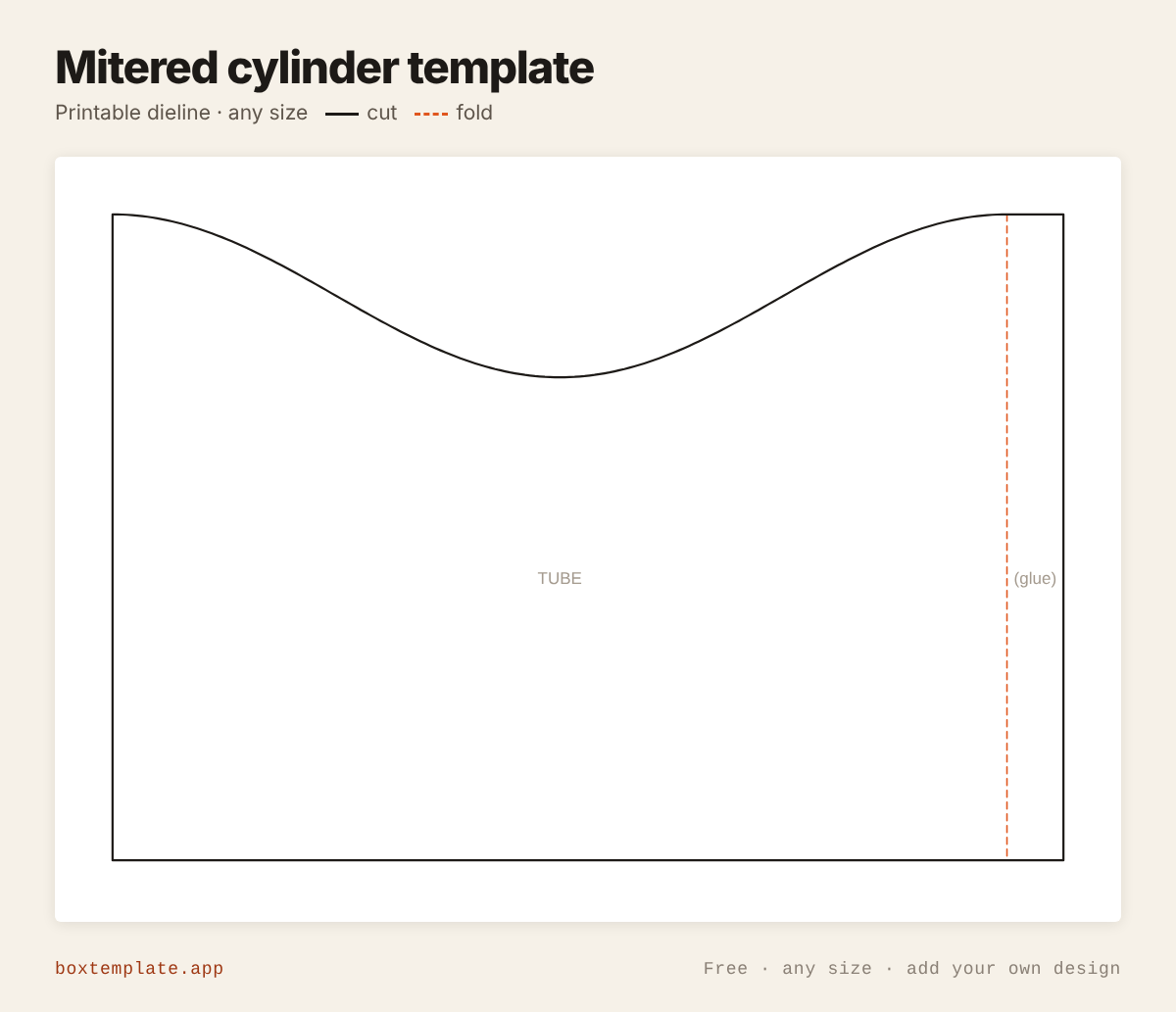
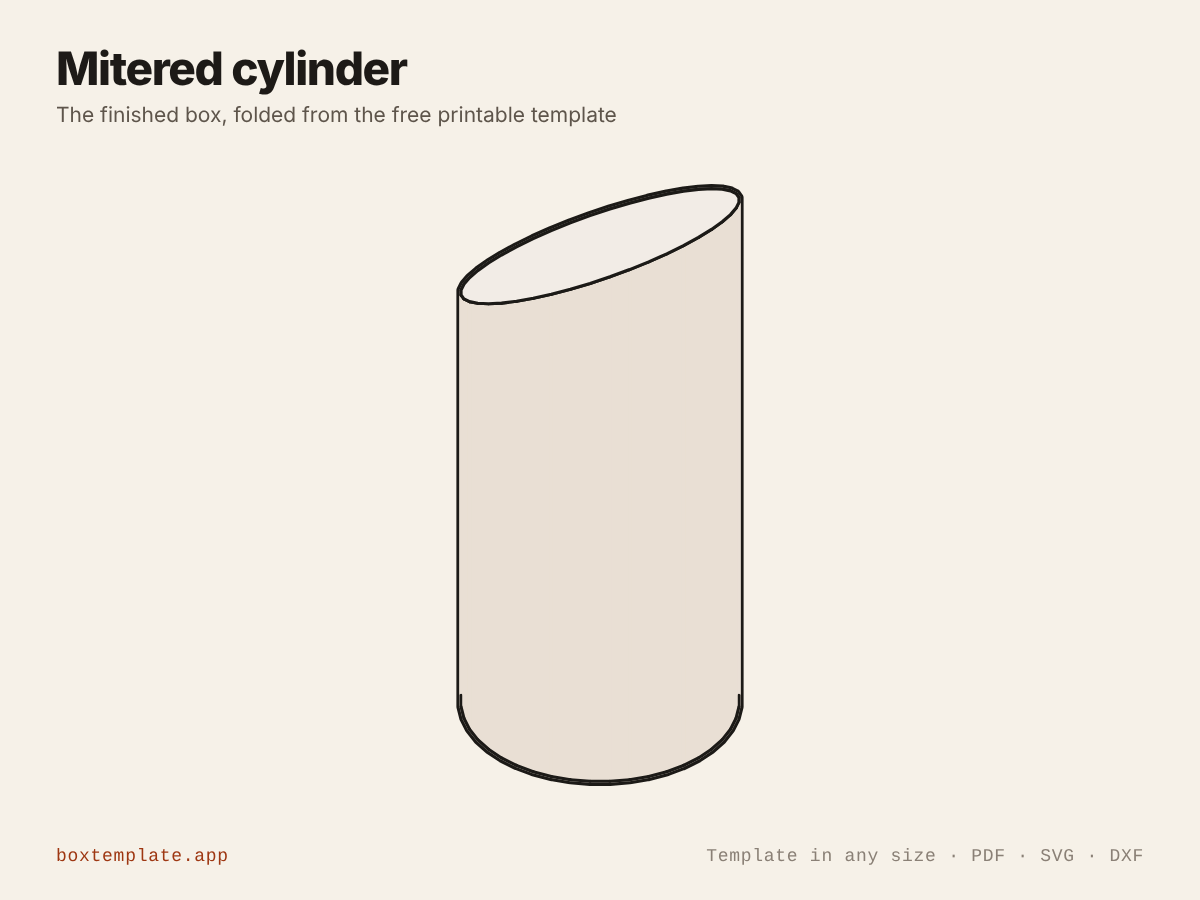
The mitered cylinder template, flat and folded
What this template is for
A tube cut off at an angle at one or both ends, with a twist between the two cuts. Elbows and bends, chimney and duct sections, model rockets, costume horns.
Also called angled tube · pipe elbow template · mitred cylinder · duct elbow — all the same shape, and this is it.
- Pipe and duct elbows
- Chimney and flue sections
- Model rockets and props
- Costume horns and cones
How to use this template
All four downloads are the same mitered cylinder at the same size — only the format changes.
- PDF printing at home
- Print at 100 per cent, or hand it to a print shop as "actual size, no scaling".
- PNG 300 dpi Canva, Photoshop, Procreate
- Upload, lock it in place and design your mitered cylinder on top. Free plan and phone included. Full Canva walkthrough →
- SVG Cricut, Illustrator, Inkscape, Affinity
- Vector, with cuts, folds and labels on separate layers. Cricut and Silhouette walkthrough →
- DXF Silhouette, laser and vinyl cutters
- Two layers, CUT and FOLD — and the one free Silhouette Studio Basic will open.
Printing it
- Type your size above, then download the PDF.
- Print at 100% — never “fit to page”, or every measurement comes out wrong.
- Too big for the paper? Pick your paper size and leave Fit the pieces to the page ticked: each piece gets its own place on a sheet and the PDF comes out with every page in it, nothing cut in half and nothing to tape.
How to put it together
These pictures are the mitered cylinder itself, not a generic diagram — change the measurements above and the template changes, but the three steps never do.
-
Cut the solid lines
Every solid line is a cut. Do the inside shapes first, while the sheet is still whole and easy to hold.
-
Score every dashed line
Dashed lines are folds. Score each one first — an empty ballpoint against a ruler — or the card cracks along the outside of the bend.
-
Fold, glue and hold
Curl the sheet over a table edge before you glue anything. Roll it into a tube and glue the lap. Two of these, cut at half the bend angle each, meet to make an elbow.
Glue: a glue stick for paper, white PVA on card — hold each seam thirty seconds, and let it dry before you use it.
Questions about the mitered cylinder
- How do I make an elbow out of these?
- Two of them, each cut at half the angle you want the bend to be, joined at their sloped faces. A 90 degree elbow is two tubes mitered at 45 degrees. For a tighter, smoother bend use more sections at smaller angles.
- What does the twist do?
- It turns the bottom cut relative to the top one. Leave it at zero and the two cuts lie in line, which gives a flat bend; turn it and the run of pipe changes direction as well as angle.
- Why is the top edge a wave?
- Because a flat cut across a rolled tube unrolls into a cosine wave. It looks wrong on the sheet and comes out perfectly straight once the tube is rolled.
Print your own design on it
Add a logo, photo or pattern in the panel on the left and drag it onto the mitered cylinder. It is trimmed to the cut outline, embedded properly in the PDF, and never leaves your computer — most free template sites hand you the outline and stop there. How printing your own design works.
Templates like this one
See all 118 templates · For Canva · For Cricut · For Etsy sellers · Getting it printed
Collections: Wedding and party favour box templates · Christmas box templates · Food box templates