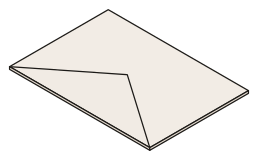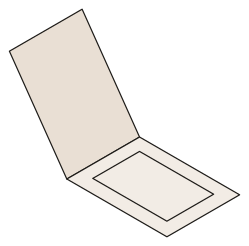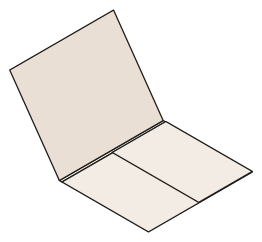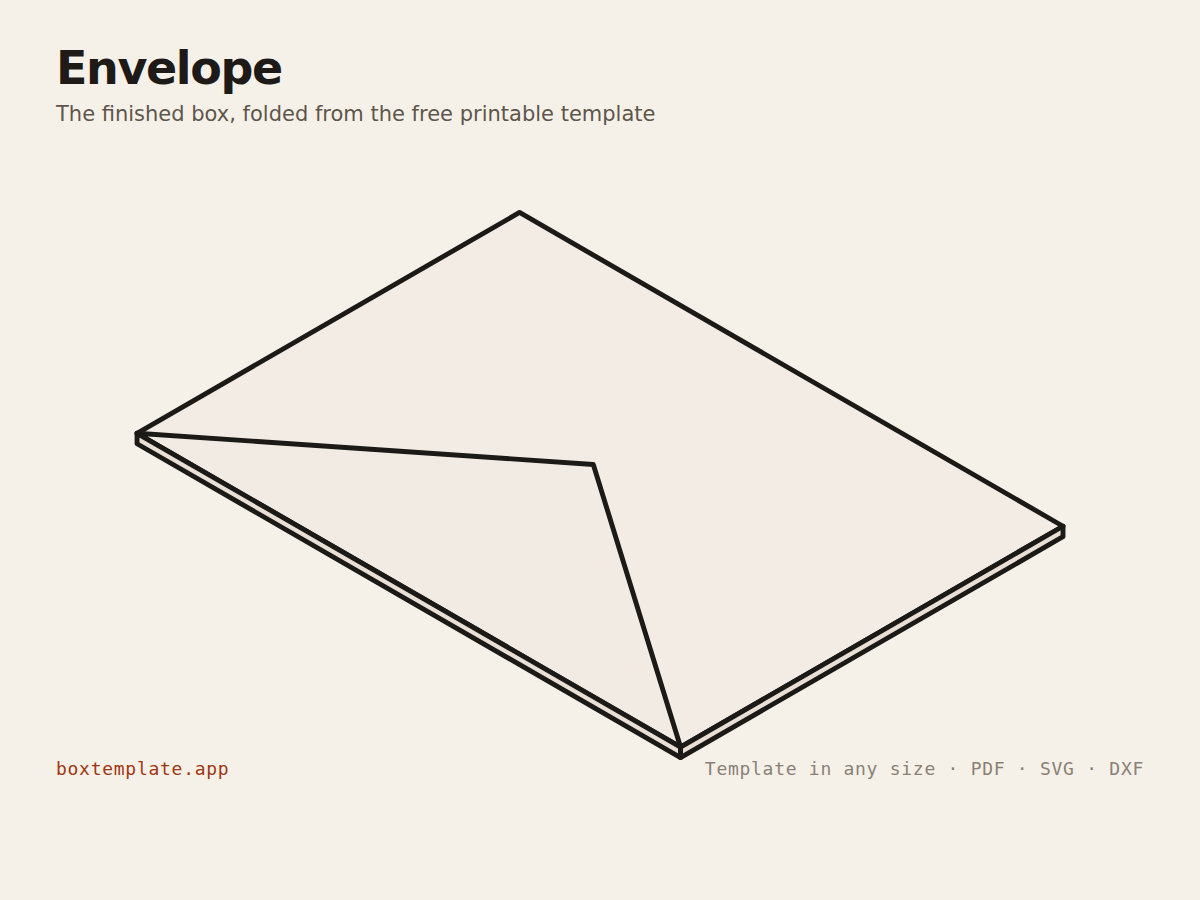
A shop envelope is the right size for a standard card and the wrong size for everything else: the square invitation, the photo print, the seed packet, the handmade card that came out a few millimetres too big. The Envelope template draws one to any size you type, so start from what goes inside rather than from what the shop sells.
1. Measure what goes inside
Measure the card, photo or folded letter, then add 2 to 3 mm to each measurement. That is enough for it to slide in without catching, and not so much that it rattles around. For something thick, such as a card with a ribbon, a pressed flower or a few layers of paper, add its thickness as well, because an envelope wraps over the top of whatever is inside.
Type the result as the envelope's width (the long side, across the opening) and height. The flaps are added around it.
2. Or start from a standard size
If the card is a standard size, use the envelope made for it. These are the sizes the template page lists, each with what it holds:
- C7, 114 × 81 mm: an A7 card (74 × 105 mm).
- C6, 162 × 114 mm: an A6 card (105 × 148 mm), or A4 folded twice.
- DL, 220 × 110 mm: an A4 letter folded in three, or compliment slips.
- C5, 229 × 162 mm: an A5 card, or A4 folded once.
- A2 (US), 5¾ × 4⅜ in (146 × 111 mm): a 4¼ × 5½ in card, which is US Letter folded in four.
- A7 (US), 7¼ × 5¼ in (184 × 133 mm): a 5 × 7 in invitation or card.
- #10 (US), 9½ × 4⅛ in (241 × 105 mm): US Letter folded in three.
Open the Envelope page and tap a size in its table to open the template already set to it.
3. Check the paper size before you print
Envelopes take more paper than people expect, because a flap wraps round every side. With the flaps the template opens with, a C7 envelope fits on a sheet of US Letter, while C6, DL and US A2 need A3, and C5 needs bigger paper still. You do not have to work this out: if the envelope will not fit the paper you chose, the box maker says so before you print and offers bigger paper or a smaller envelope. It never splits an envelope across two sheets.
No A3 printer? Print the template on whatever paper fits, cut it out, and use it as a pattern to draw round on bigger paper. Wrapping paper, maps and old book pages all make good envelopes this way.
Whatever you print on, print at 100% or "actual size". If the first one comes out small, this explains why.
4. Choose the paper
- Ordinary printer paper (about 80 gsm) makes a light envelope for a letter or a flat card. It folds easily but shows what is inside if you hold it to the light.
- Heavier paper, around 100 to 120 gsm, is the best all-rounder: opaque, crisp folds, still easy to glue.
- Thin card suits envelopes that will be handled a lot, such as seed packets, money envelopes and photo sleeves. Score the folds first or they crack.
Set the material thickness in the maker to match, so the folds allow for it. The card guide explains how to measure paper and card thickness.
5. Fold it in the right order
- Cut along the solid lines and score the dashed ones. A blunt pencil or an empty ballpoint pen against a ruler is enough for paper; the scoring guide covers card.
- Fold the two side flaps in.
- Fold the bottom flap up over them and glue it to the side flaps. Put the glue near the edges of the side flaps, not in the middle, so nothing inside sticks to it.
- Put the card in, then close the top flap last.
6. Seal it
A glue stick along the top flap is the simplest seal. Double-sided tape is neater and does not wrinkle thin paper. For a wedding or an invitation, a sticker or a wax seal looks finished and lets the person open it without tearing. If you are posting the envelope, a wax seal on the outside can catch in sorting machines, so check with your post office or put the sealed envelope inside a plain one.
Putting a design on it
Add a picture in the box maker, such as a pattern, a monogram or a child's drawing, and drag it onto the drawing. It prints on the envelope, trimmed to the outline. The guide to adding your logo shows how, and it works the same on an envelope as on a box.
Questions
Can I post a handmade envelope?
Usually, yes. Postal services set rules on size, weight and thickness, and some charge more for square or unusually shaped envelopes. Check your own postal service's rules before you make a batch for posting, and write the address clearly in dark ink if the paper is patterned.
How do I make a square envelope?
Type the same width and height. Square envelopes are popular for invitations; see the question above before posting them.
Can I make an envelope without glue?
For something you hand over rather than post, yes: tuck the top flap inside instead of gluing it. For a gift card or money with no envelope at all, the Gift card holder holds it by two corners with no glue.