The rhombus box template, flat and folded
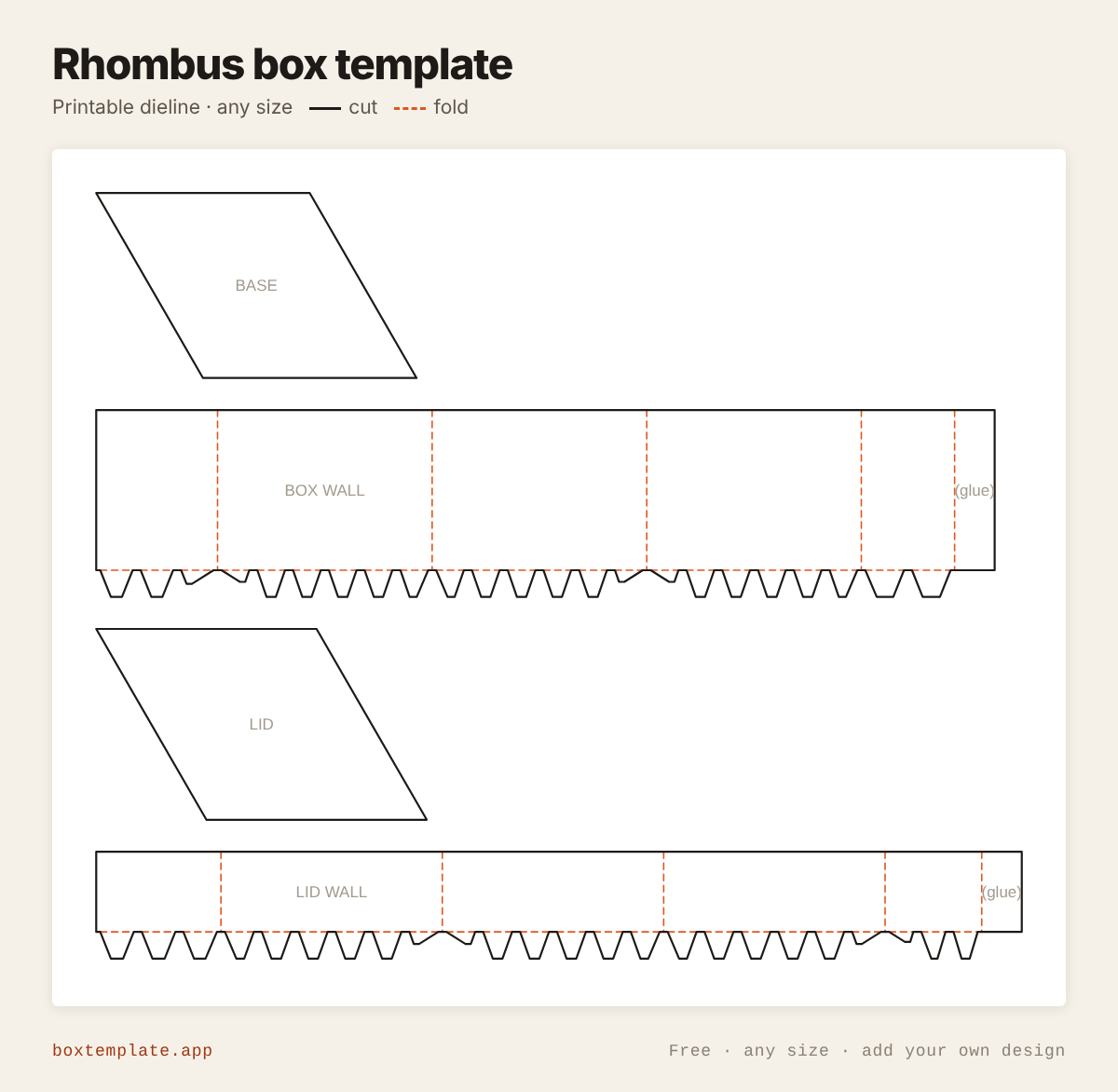
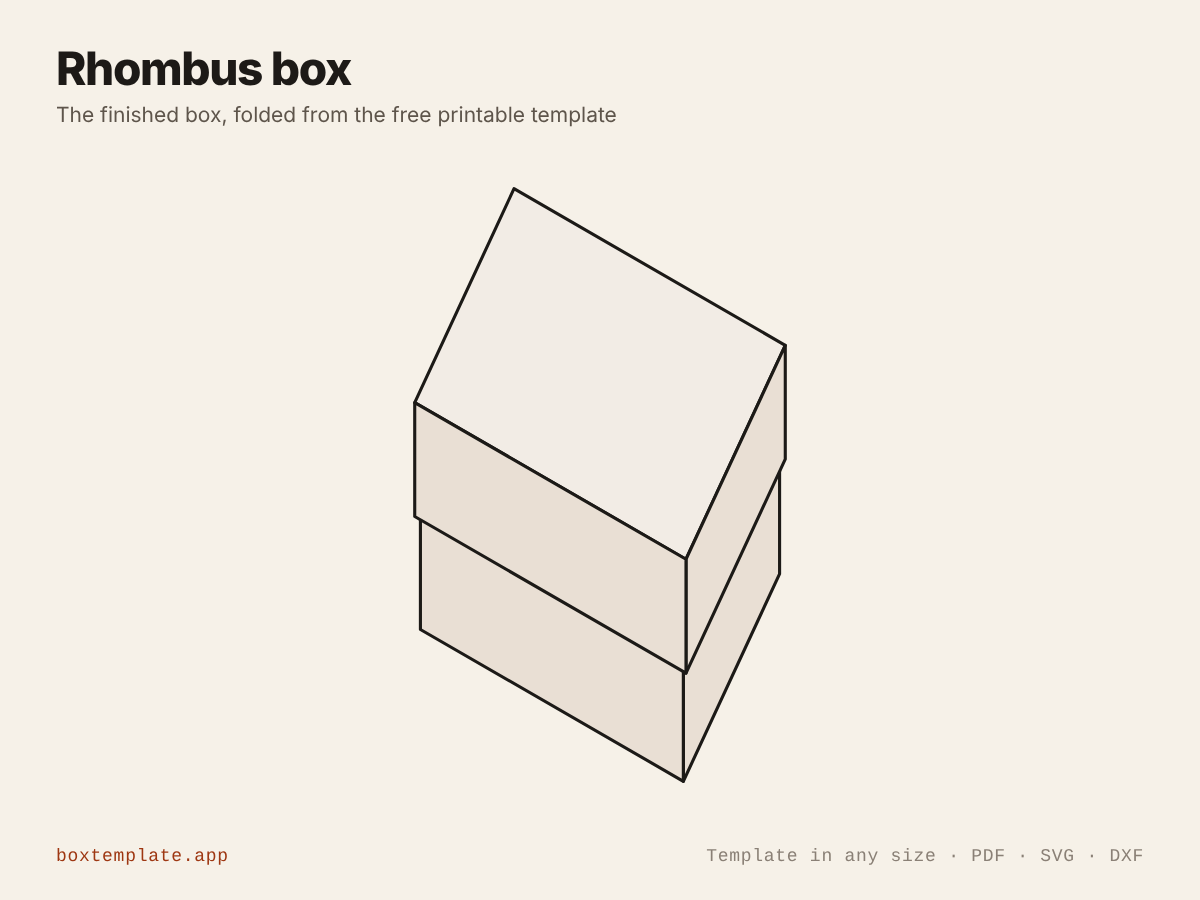
What this template is for
A diamond in plan: four equal sides, two sharp corners and two blunt ones. Set the angle to 90° and it is a square box.
Also called diamond box · diamond shaped box · parallelogram box — all the same shape, and this is it.
- Diamond and gem-themed gift boxes
- Geometric wedding favours
- Display boxes for jewellery
- Tessellating boxes for a shop shelf
How to use this template
All four downloads are the same rhombus box at the same size — only the format changes.
- PDF printing at home
- Print at 100 per cent, or hand it to a print shop as "actual size, no scaling".
- PNG 300 dpi Canva, Photoshop, Procreate
- Upload, lock it in place and design your rhombus box on top. Free plan and phone included. Full Canva walkthrough →
- SVG Cricut, Illustrator, Inkscape, Affinity
- Vector, with cuts, folds and labels on separate layers. Cricut and Silhouette walkthrough →
- DXF Silhouette, laser and vinyl cutters
- Two layers, CUT and FOLD — and the one free Silhouette Studio Basic will open.
Printing it
- Type your size above, then download the PDF.
- Print at 100% — never “fit to page”, or every measurement comes out wrong.
- Too big for the paper? Pick your paper size and leave Fit the pieces to the page ticked: each piece gets its own place on a sheet and the PDF comes out with every page in it, nothing cut in half and nothing to tape.
How to put it together
These pictures are the rhombus box itself, not a generic diagram — change the measurements above and the template changes, but the three steps never do.
-
Cut the solid lines
Every solid line is a cut. Do the inside shapes first, while the sheet is still whole and easy to hold.
-
Score every dashed line
Dashed lines are folds. Score each one first — an empty ballpoint against a ruler — or the card cracks along the outside of the bend.
-
Fold, glue and hold
The wall strip folds at all four corners — crease them before you glue. Start the loop at a blunt corner, never at a sharp one, or the seam will not sit flat.
Glue: a glue stick for paper, white PVA on card — hold each seam thirty seconds, and let it dry before you use it.
Questions about the rhombus box
- What is a rhombus box?
- A box whose plan is a rhombus — four equal sides, two sharp corners and two blunt ones. Set the corner angle to 90 degrees and it is simply a square box.
- Where should the seam go?
- At a blunt corner. The wall strip is glued into a loop, and a seam landing on a sharp corner has to bend through a tight angle at exactly the point where the card is doubled, which never sits flat.
- Do rhombus boxes tessellate?
- Yes — at 60 or 120 degrees a set of them tiles a shelf with no gaps, which is why the shape turns up in display packaging.
Print your own design on it
Add a logo, photo or pattern in the panel on the left and drag it onto the rhombus box. It is trimmed to the cut outline, embedded properly in the PDF, and never leaves your computer — most free template sites hand you the outline and stop there. How printing your own design works.
Templates like this one
See all 118 templates · For Canva · For Cricut · For Etsy sellers · Getting it printed
Collections: Wedding and party favour box templates · Christmas box templates · Food box templates